How often should you schedule drain cleaning in Phoenix?
Most Phoenix homes need professional drain cleaning every 12 to 24 months. Restaurants and older central-Phoenix homes often need it every 6 to 12 months.
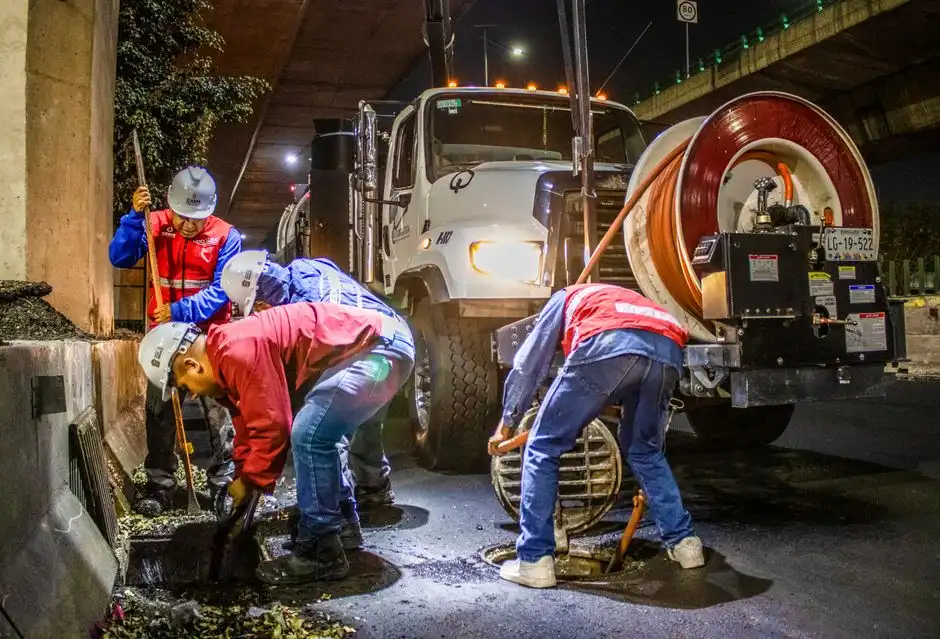
For a typical single-family home in Phoenix, schedule professional drain cleaning every 12 to 24 months. If your house was built before 1990, sits on a lot with mature ficus or palm roots, or has more than four people living in it, plan on every 12 months. Restaurants, salons, and any commercial kitchen in the Valley need it every 6 to 12 months, sometimes quarterly. That is the whole answer. The rest of this article explains why Phoenix drains behave the way they do, how to spot a line that is already halfway blocked, and what drain cleaning actually costs here in 2026.
The short answer for Phoenix homes
How often drain cleaning in Phoenix AZ is needed comes down to three variables: the age of your pipes, what goes down the drain, and what is growing outside in the yard. A 1970s ranch house in Sunnyslope with cast iron under the slab and a 40-foot ficus in the front yard is a different animal than a 2019 build in Buckeye with PVC and no mature trees.
Here is the baseline we give customers when they ask us on a service call:
- Homes built after 2000, PVC drains, no large trees: every 18 to 24 months.
- Homes built 1970-2000, mixed cast iron and PVC: every 12 to 18 months.
- Homes built before 1970, cast iron or Orangeburg, mature trees: every 6 to 12 months.
- Restaurants, cafes, commercial kitchens: every 3 to 6 months.
- Apartment complexes and HOAs: every 6 to 12 months per building stack.
Those intervals are not arbitrary. They come from how fast grease, soap scum, and mineral scale build up inside a pipe in our water and our heat. If you want the full menu of what we handle on a call, our drain cleaning Phoenix AZ page covers the equipment and the process.
Why Phoenix drains clog faster than most cities
Phoenix water is hard. Depending on which side of the Valley you are on, we see 12 to 18 grains per gallon of calcium carbonate, and in some wells it runs higher. That calcium precipitates out on the inside of your pipes the same way it does on a showerhead. Over two or three years, a 2-inch kitchen line can lose a quarter inch of its interior diameter to scale alone.
Then there is the heat. A drain line running through an attic or under a slab in July sees sustained temperatures above 110°F. That accelerates bacterial growth in the organic film that coats the pipe wall, and that film is what catches hair, grease, and food particles in the first place. In cooler cities, that film stays thin. Here it turns into a felt-like layer.
Roots are the third factor. Ficus, palm, mesquite, and willow roots hunt for moisture, and a sewer line is the most reliable moisture source in a desert yard. A hairline crack in a 40-year-old cast iron line is an open invitation. We have pulled root masses the size of a basketball out of lines in Arcadia and central Phoenix. For homes in those older neighborhoods, sewer line repair Phoenix AZ is often the real fix once roots have cracked the pipe.
How often should I schedule drain cleaning in Phoenix AZ by property type?
The right interval depends on what your building does all day. A family of four and a 60-seat restaurant put completely different loads on the same 4-inch line.
Single-family homes
Every 12 to 24 months for most. If you have a garbage disposal and use it daily, lean toward 12. If you have a water softener, you can stretch it - soft water does not deposit scale, so the pipe stays smoother and the film builds slower. We install and service those units, and you can see how they work on our water softener installation and service Phoenix AZ page.
Older central-Phoenix and Tempe homes
Every 6 to 12 months. Cast iron from the 1950s and 1960s is rough on the inside after 60-plus years of hard water. The roughness is the problem - it grabs everything. Annual cleaning keeps the line open until you are ready for a full replacement.
Restaurants and commercial kitchens
Every 3 to 6 months, and quarterly is the safe default for a busy kitchen. Grease is the enemy, and no amount of enzyme treatment replaces mechanical cleaning once the line has a half-inch of congealed fat on the wall. We handle these on a scheduled basis through our commercial plumbing services Phoenix AZ division.
Apartment buildings and HOAs
Every 6 to 12 months per stack. Vertical stacks in multi-family buildings collect everything from every unit above, and one tenant flushing wipes turns a slow stack into a flood on the first floor. Scheduled cleaning is far cheaper than a water-damage claim.
Signs you need drain cleaning now, not next year
Your drains tell you when they are in trouble long before they stop draining. Here is what we listen for on a call:
- Water backs up in one fixture when you use another. Running the washing machine and watching the kitchen sink gurgle means the shared line is restricted.
- Drains are slow every morning, then fine by noon. That is standing water sitting in the trap overnight and slowly seeping past a partial blockage.
- You smell sewer gas in the bathroom or laundry. A dry or blocked vent stack is usually the cause.
- Two or more fixtures are slow at the same time. The problem is in the main line, not the fixture.
- You hear gurgling from a tub or shower when the toilet flushes. Classic sign of a vent or main-line restriction.
- Water pools around the floor drain in the garage or laundry room. That is a main-line backup starting.
Any one of those means call now. Two or more means stop using water until someone looks at it. If the backup is already on the floor, that is an emergency plumber Phoenix AZ situation, not a next-week appointment.
Hydro jetting vs drain snake in Phoenix AZ
A drain snake cuts a hole through the clog. Hydro jetting scours the entire pipe wall clean. That difference matters more in Phoenix than almost anywhere else because of the scale and grease film we just talked about.
A snake is the right tool for a single soft clog - a hair ball in a bathroom sink, a wad of paper in a toilet. It is fast, it is cheap, and it clears the immediate problem. What it does not do is remove the biofilm and scale on the pipe wall, which means the same line will slow down again in three to six months.
Hydro jetting uses water at 3,500 to 4,000 PSI pushed through a rotating nozzle. It strips the pipe back to bare metal or PVC, removes roots, and flushes the debris out to the city main. For a main sewer line in a Phoenix home with hard water and any tree roots, hydro jetting is the better call - and it is what we recommend for any line that has been snaked twice in two years. You can read the full process on our hydro jetting Phoenix AZ page.
One caveat: hydro jetting is not safe on Orangeburg pipe, on collapsed clay, or on any line with a known crack. That is why we run a camera first on anything older than 1980.
What drain cleaning costs in Phoenix Arizona in 2026
Typical 2026 pricing in the Phoenix metro runs like this:
- Single fixture (sink, tub, toilet): $125 to $250.
- Main sewer line, snake only: $250 to $450.
- Main sewer line with hydro jetting: $400 to $750.
- Camera inspection add-on: $150 to $350.
- Commercial kitchen line, quarterly contract: $300 to $600 per visit.
Those ranges move based on access. A cleanout in the front yard is a 45-minute job. A line that has to be accessed through a roof vent or under a slab takes longer and costs more. We give you the price before we start, and it does not change once we are on site.
Compare that to the alternative. A main-line backup that floods a laundry room typically runs $3,000 to $8,000 in water damage remediation, plus the drain cleaning you still have to pay for. Preventive drain cleaning Phoenix AZ is the cheapest plumbing service you can buy.
What to watch out for
Most of the drain problems we see in Phoenix were caused by something the homeowner did on purpose, thinking it was helping.
- "Flushable" wipes. They are not. They do not break down, and they snag on every rough spot in a cast iron line. This is the number one cause of main-line backups we clear in homes built before 1990.
- Liquid drain cleaner. Caustic soda and sulfuric acid products generate heat, and heat is what cracks old cast iron and warps PVC. They also do nothing for a root intrusion or a grease blockage. Use them once and you may turn a $300 cleaning into a $6,000 repipe.
- Grease down the kitchen sink. Even with hot water and dish soap, grease cools and sticks within 20 feet of the drain. Pour it in a can and throw it away.
- Coffee grounds and eggshells. Both are heavy, both settle, both build up. The disposal does not grind them fine enough.
- Skipping the camera. If a company snakes your main line three years in a row without ever running a camera, they are treating a symptom. You want to know whether the line is cracked, bellied, or full of roots.
If your line has been snaked twice in two years, ask for a camera inspection before the third visit. That is the point where a repair or replacement usually costs less than continued cleaning.
When to call a professional
Call us when a single fixture is slow for more than a few days, when two fixtures back up at once, when you smell sewer gas, or when you hear gurgling in a tub after a toilet flush. Those are all main-line symptoms, and they do not fix themselves.
Call us immediately if water is backing up into a shower or floor drain, if you have standing water in the yard over the sewer line, or if the backup is in a commercial kitchen during service hours. We run same-day drain cleaning across the Valley, and our team carries cameras and jetters on every truck so we can diagnose and clear the line in one visit.
We are a state-licensed plumbing contractor, and we work on everything from a slow bathroom sink in a 1950s ranch house to a full commercial kitchen line in a strip mall. If you are not sure whether you need a cleaning or a repair, we will tell you straight - and if the answer is "you don't need us yet," we will say that too.
Frequently Asked Questions
How often should I schedule drain cleaning in Phoenix AZ?
Every 12 to 24 months for most single-family homes. Go to every 6 to 12 months if your home was built before 1990, has mature trees over the sewer line, or houses more than four people. Commercial kitchens need it every 3 to 6 months.
How much does drain cleaning cost in Phoenix Arizona?
In 2026, expect $125 to $250 for a single fixture, $250 to $450 for a main-line snake, and $400 to $750 for hydro jetting. Camera inspection adds $150 to $350. Access and line condition drive the final number.
Do I need professional drain cleaning in Phoenix?
Yes if two or more fixtures drain slowly, if you smell sewer gas, if a tub gurgles when the toilet flushes, or if the line has been snaked twice in two years. Those point to a main-line problem that store-bought products cannot fix.
What are signs I need drain cleaning in Phoenix AZ?
Slow drains that recover overnight, water backing up in one fixture when another runs, gurgling sounds, sewer odor in the bathroom or laundry, and pooling around a floor drain. Any one of those means the line is already restricted.
Is hydro jetting safe for my pipes?
Yes for PVC, ABS, cast iron in good condition, and clay in good condition. It is not safe for Orangeburg, collapsed clay, or any pipe with a known crack. We run a camera first on anything older than 1980.
Get help with Plumbing services in Phoenix
If your drains are slow, gurgling, or backing up, we can be at your door today. Our team handles plumbing services Phoenix AZ for homes and businesses across the Valley, from a single slow sink to a full main-line jetting.
Call phoenix plumbing pro at (602)533-0560 and we will get your drains moving again.