How to Winterize Your Plumbing in Phoenix
Phoenix pipes freeze more often than most homeowners expect. Here is the exact winterization routine we run on Valley homes before the first cold snap.
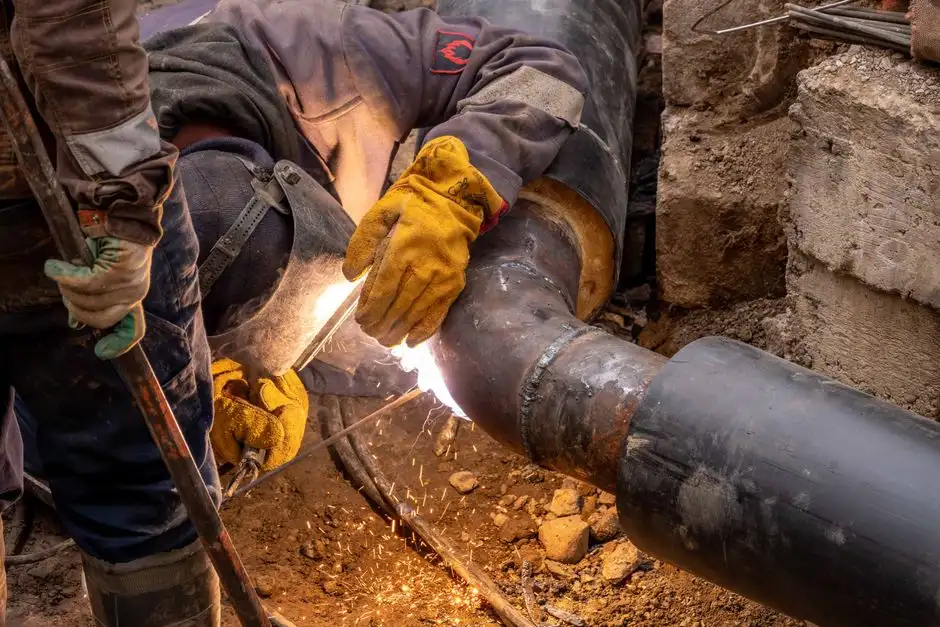
Winterizing your plumbing in Phoenix means insulating every exposed pipe, shutting off and draining outdoor lines, and keeping a slow drip on the two or three fixtures most likely to freeze during a hard overnight cold snap. It takes an afternoon and about $60 to $150 in materials, and it is the difference between a normal January morning and a burst pipe spraying water into your attic at 3 a.m.
Most Valley homeowners assume this is desert country and pipes simply do not freeze here. They do, and they do it every winter. We run this exact routine on homes across the metro, and the calls that come in after a freeze are almost always from the houses that skipped it. Here is how to do it yourself, what it costs if you would rather have us handle it, and the warning signs that mean you should stop and call a plumber instead.
Do Phoenix pipes actually freeze?
Yes. Phoenix pipes freeze several times each winter, usually between midnight and 7 a.m. during the December and January cold snaps when overnight lows drop into the high 20s and low 30s. The city averages a handful of nights below 32°F every season, and the outer suburbs - Anthem, Cave Creek, Queen Creek, Apache Junction - get more.
What surprises people is not that it gets cold. It is where the damage happens. Phoenix homes are built for heat, not cold. Plumbing often runs through the attic, along exterior north-facing walls, through uninsulated garages, and out to pool equipment pads that sit fully exposed to the night sky. Those runs have no freeze protection because the builder never expected them to need any.
Water expands about 9% when it turns to ice. That expansion is what splits copper, cracks CPVC, and blows apart the cheap poly fittings behind your washing machine box. The pipe usually does not burst where the ice forms - it bursts downstream, between the ice plug and the closed faucet, where pressure has nowhere to go. That is why a homeowner in Ahwatukee wakes up to water pouring out of a ceiling that looks perfectly fine from the outside.
If you want a licensed crew handling the whole routine for you, our Plumbing services Phoenix AZ team does winterization walkthroughs every November and December.
What temperature should you worry about frozen pipes in Phoenix?
Start paying attention when the overnight forecast hits 32°F, and take action at 28°F or below for four or more consecutive hours. Exposed pipes in an attic or on a north wall can freeze at 30°F if the wind is blowing, because wind chill pulls heat off the pipe faster than still air does.
The duration matters more than the low. A two-hour dip to 29°F rarely causes problems. Six hours at 27°F will freeze a half-inch copper line in an uninsulated attic almost every time. The National Weather Service issues freeze warnings for the Phoenix metro when lows are forecast at or below 32°F, and those warnings are the trigger to run your drip routine.
Two other conditions make a freeze far more likely:
- Wind. A 15 mph north wind on a 30°F night freezes pipes that would survive 28°F in calm air.
- Clear skies. Radiant heat loss to a clear sky drops the surface temperature of exposed pipe and pool equipment 3 to 5 degrees below the official air temperature.
If your home has any plumbing in the attic - and most single-story Phoenix homes built after 1980 do - assume you are in the risk zone any night the forecast says 30°F or lower.
How to winterize your plumbing in Phoenix AZ: the 8-step routine
This is the same sequence our technicians run. Do it once in late November, then repeat steps 5 and 6 any night a freeze warning is issued.
1. Find every exposed pipe
Walk the attic, the garage, the exterior walls, and the pool equipment pad. Look for copper, CPVC, PEX, and the backflow assembly near the street. If you can see the pipe, it can freeze.
2. Insulate with the right material
Use closed-cell foam pipe insulation sized to the pipe - 1/2-inch, 3/4-inch, or 1-inch ID. It costs about $1.50 to $3 per six-foot section at any Phoenix hardware store. Wrap every exposed run, and tape the seams. For attic runs, add a layer of fiberglass batt over the top of the foam; foam alone slows heat loss but does not stop it on a six-hour freeze.
3. Seal the attic and crawlspace penetrations
Cold attic air pours through the gaps where pipes pass through the top plate. Foam sealant around those penetrations keeps the cold out and, in summer, keeps the heat out too. This is a 20-minute job that pays for itself twice a year.
4. Disconnect and drain outdoor hose bibs
Disconnect every garden hose. A hose left connected traps water in the bib and the bib is the first thing to split. If you have a shutoff valve inside for the hose bib, close it and open the outside spigot to drain the line. If you do not have an interior shutoff, install a foam faucet cover - about $5 - over each bib.
5. Run a slow drip on the risk fixtures
On any night forecast at 30°F or below, open the faucets on the exterior walls - usually the kitchen sink, a bathroom on the north side, and any fixture over a slab. A pencil-thin stream, about the width of a toothpick, is enough. Moving water takes far longer to freeze than still water.
6. Open cabinet doors under sinks on exterior walls
Warm house air has to reach the pipes. Open the doors under the kitchen sink and any bathroom sink on an exterior wall. If you have a sink on a slab against a north wall, this is the single most effective thing you can do.
7. Protect the water heater and pool equipment
An outdoor tankless unit needs its freeze-protection circuit powered - do not unplug it. A tank water heater in the garage should be wrapped with an insulation blanket if it is more than eight years old. Pool pumps should run overnight during a freeze; moving water in the pump and filter lines is what keeps them from cracking.
8. Know where your main shutoff is
Find the main shutoff valve now, before you need it. In most Phoenix homes it is at the street in a concrete box, or on the side of the house near the hose bib. If a pipe bursts, shutting the main off in the first 60 seconds is the difference between a $400 repair and a $14,000 insurance claim.
If you would rather have us handle the insulation, sealing, and inspection in one visit, we do that as part of our residential plumbing services Phoenix AZ.
Which pipes are most at risk in a Phoenix home?
The pipes most likely to freeze in a Phoenix home are the ones in the attic, on north-facing exterior walls, in uninsulated garages, and on pool equipment pads. Those four locations account for the vast majority of the burst-pipe calls we run between December and February.
A few specifics worth knowing:
- Attic runs. Common in single-story homes built after 1980. The attic can drop 10 to 15 degrees below the outdoor air temperature on a clear night.
- North and northeast exterior walls. These never get direct sun in winter, so they stay cold all day and freeze first.
- Garage walls. An uninsulated Phoenix garage runs 5 to 10 degrees colder than the house. Any plumbing on the garage wall is exposed.
- Pool equipment. The pump, filter, and heater sit on an open pad. A cracked pump housing is a $600 to $1,200 repair.
- Backflow assemblies. Required on most commercial and many residential irrigation systems. They sit above ground and freeze fast. If yours is exposed, it needs a cover or it needs to be drained. We handle those through our backflow prevention and testing Phoenix AZ service.
Older neighborhoods with 1950s and 1960s housing stock - parts of central Phoenix, Sunnyslope, and Maryvale - often have original galvanized or early copper lines that are already weakened. Those pipes are the ones that split first. If your home is in one of those areas and you have not had the plumbing looked at, a winter inspection is worth the trip. We run a lot of plumbing repairs Phoenix AZ in those neighborhoods every January.
Common winterization mistakes we see every January
The same handful of mistakes cause most of the freeze damage we repair. Avoid these and you cut your risk dramatically.
- Assuming Phoenix is too warm to freeze. It is not. The metro hits the high 20s most winters, and the outer suburbs hit the low 20s.
- Leaving the garden hose connected. This is the single most common cause of a split hose bib. Disconnect it in November and leave it off until March.
- Insulating only the pipe, not the fittings. Elbows, tees, and valves freeze before straight runs. Wrap them too.
- Unplugging the tankless water heater. The freeze-protection circuit only works if the unit has power. Leave it plugged in.
- Shutting off the pool pump. Running the pump overnight during a freeze is what protects the equipment. Do not turn it off to save electricity on a freeze night.
- Not knowing where the main shutoff is. We cannot count how many homeowners have stood in a flooded hallway at 5 a.m. looking for the valve. Find it now.
- Ignoring a slow drain or a dripping faucet in December. A small leak that was fine in October can freeze and split in January. Fix it before the cold arrives.
When to call a professional
Call a plumber before the freeze if you have plumbing in an attic you cannot safely access, if your home has original galvanized lines, if you have already had a freeze-related repair in the last three winters, or if you simply do not want to spend a Saturday in a 40-degree attic wrapping pipe.
Call us immediately if a pipe has already burst. Shut off the main, then call phoenix plumbing pro. We run emergency plumbing services Phoenix AZ through the night during freeze events, and we can usually have a technician at your door within the hour for a burst line. We find the break, repair or replace the section, and pressure-test the line before we leave.
If you are not sure whether your home needs winterizing, we will tell you honestly. Some newer builds with PEX throughout and no attic runs genuinely do not need much. Most homes do.
Frequently Asked Questions
How do I winterize my plumbing in Phoenix AZ?
Insulate every exposed pipe in the attic, garage, and exterior walls with closed-cell foam. Disconnect and drain outdoor hose bibs. Seal attic penetrations. On freeze nights, drip the exterior-wall faucets and open cabinet doors under sinks. Know where your main shutoff is before you need it.
Do I need to winterize my pipes in Phoenix Arizona?
Yes, if your home has any plumbing in the attic, on a north-facing exterior wall, in an uninsulated garage, or on a pool pad. That covers most Phoenix homes. The metro drops below freezing several nights each winter, and exposed pipes freeze at 28°F to 30°F.
What temperature should I worry about frozen pipes in Phoenix?
Start watching at 32°F and take action at 28°F or below for four or more hours. Wind and clear skies make freezing more likely at higher temperatures. A 15 mph north wind on a 30°F night will freeze an uninsulated attic line.
How much does plumbing winterization cost in Phoenix AZ?
DIY materials run $60 to $150 for a typical home. Professional winterization in 2026 runs $150 to $400 depending on attic access, pipe count, and whether backflow or pool equipment is included. A burst-pipe repair, by comparison, starts around $500 and climbs fast with water damage.
What should I do if a pipe freezes but has not burst?
Shut off the main, open the nearest faucet, and warm the pipe gently with a hair dryer or a space heater - never an open flame. If you cannot find the frozen section or the pipe has already split, call a plumber. Thawing a burst pipe releases the water.
Get help with Plumbing services in Phoenix
We winterize homes across the Valley every November and December, and we are on call through every freeze night in January. If you want the routine handled once, correctly, before the first cold snap, call us at (602)533-0560 and we will get you on the schedule.